Congressman Greg Murphy (NC-3), who is also a physician, recently shared a statistic: a portion of medical graduates aren't in full-time clinical practice five years out. His response was a list of questions for the doctors who left.
Was practicing harder than residency? Were you a surgeon or primary care? Did you leave to parent? Did you take call? If you had to pick one thing that made you stop, what was it?
I read over that last one a few times. Pick one thing.
I noticed that the questions are looking for a single point of failure. A clean cause. The one thing we could fix so the bleeding stops.
But that's not how people leave a profession. And it's not how people stay in one, either.
There is no one thing
Nobody walks away from medicine because of one thing. They walk away because of a series of events, and often a squeeze. The charting after the kids are in bed. The (repeated) insurance denial on a treatment they know their patient needs. The moral weight of doing good work inside a system that keeps making good work harder. It accumulates and compounds. By the time someone leaves, asking them to "pick one thing" is like asking which raindrop caused the flood.
And the question assumes something else, quietly. It assumes that the person who entered medical school at 24 should still want the exact same life at 44. That we sign up once, for 20 to 25 years, and any deviation is a loss to be explained.
People grow. People evolve. The doctor is allowed to change even when the profession assumes she won't.
I'm one of the 1 in 5
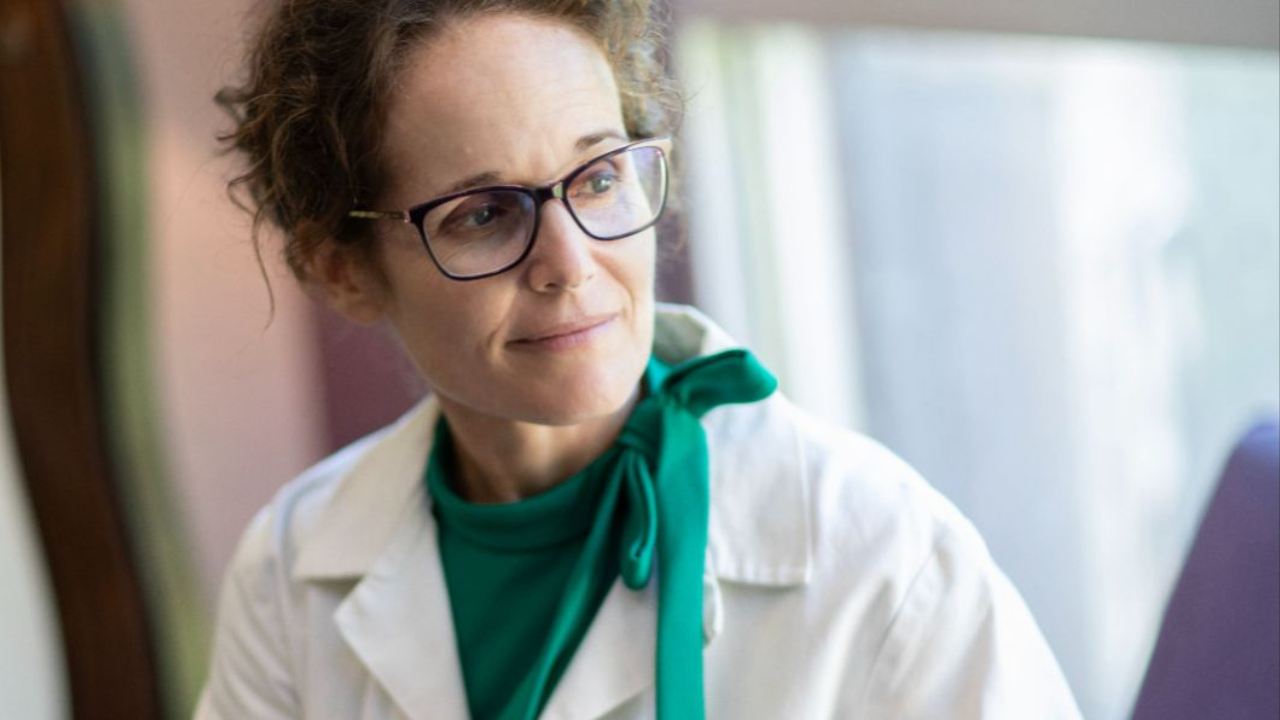
Let's be upfront. I'm a practicing physician, and I haven't worked full time within the traditional model in years. Not because I don't want to practice medicine. Because the traditional model does not support my practice or the needs of my community.
I specialize in eating disorder prevention and the relationship families have with food, body, and each other, at all ages and all sizes. That work does not fit inside a fifteen-minute visit and a billing code. It needs time, relationship, and a setting built around connection rather than throughput. So I built one.
If a Congressman put me on his list, I'd be a data point in the "stopped practicing full time" column. I'd be a loss, a freaking liability. Bleeding to be stopped. But I didn't stop practicing medicine. I changed how I practice it so that it could actually be sustained, by me and for the families I serve.
That distinction is the whole thing. I didn't leave medicine. I left the version of it that wasn't working.
How I'm flourishing now
Here's the question I wish he'd asked. Not "what made you stop," but "what makes this work."
I have a practice that matches the care I want to give. I'm not fighting a clock or a payer to do right by a family. I have room to grow and evolve, which means the work can grow and evolve with me instead of forcing me to choose between my career and the rest of my life. I'm reaching people through coaching, speaking, and content in ways the exam room alone never allowed. And I get to bring my whole self, including the humor, to work that matters.
That's not a consolation prize for someone who couldn't hack full-time clinical practice. It's a redesign. And it sustains me, which means it sustains the people who depend on me.
The questions we're not asking
If we actually want to understand the workforce, these are the questions I'd start with.
Why do we stay? What makes someone return after a pause? What is it about nonclinical and part-time and alternative practice that works, that the people in those roles have found and the people grinding through full-time clinical medicine have not?
What does sustainability actually look like, when we stop assuming it means "the same thing, forever"?
Those questions don't produce a villain or shine light on a bleeder to be stanched. They produce understanding of patterns. And that's where meaningful changes start.
Stop trying to fix this system
The goal cannot be to fix the current model, because anyone inside it can already see it doesn't work. The mandates, the administrative load and the dysregulating requirements pull physicians away from the reason they came. These are squeezing out the very people who entered believing this was for life. And then those people discover that the current practice of medicine does not sustain the lives we all depend on.
We do not need another mandate.
We need better questions, and we need to start them with empathy for the physicians living inside the existing situation. What do you need? That's the question. Not "why did you fail to stay," but "what would let you flourish."
This is a design problem. Bring design thinking to the practice of medicine: to the workforce crisis, to clinician well-being, to what a sustainable career could be built to look like. Start with the human in the system. Define what works. Then create it.
And there is tremendous hope. I upended the existing model. I have a large number of colleagues doing exactly that. We can all do that. It is available to every one of us, and it is what sustains.
The 1 in 5 isn't bleeding to be stopped. It's data. It's people telling us something about what medicine has become, and what it could be instead. We just have to ask in a way that lets them answer honestly.
Dr. Wendy Schofer, MD, is the Founder of Family in Focus®, where she helps families create stronger, lifelong relationships with food, body and especially each other.
Check out the Family in Focus with Wendy Schofer, MD Podcast!
Stay connected with news and updates!
Join our mailing list to receive the latest news and updates from our team.
Don't worry, your information will not be shared.
We hate SPAM. We will never sell your information, for any reason.